


Exam code: CCBT-E002Course number: CertCopBT01 CertCop – Blue Team Certified...
Read More
Exam code: CCRT-E023Course number: CertCopRT02
CertCop – Red Team Offensive Security
The CertCop – Red Team Offensive Security program focuses on developing the skills required to simulate cyberattacks, identify vulnerabilities, and test the resilience of organizational defenses. This program prepares individuals to think like adversaries and use advanced tools and techniques to uncover security gaps, assess risks, and provide actionable recommendations for strengthening security measures.
Why join this program
Think like an attacker, defend like a pro
01
Comprehensive Skill Development in Offensive Security
The program covers an extensive range of topics critical to Red Team operations, including Red Team Methodology, Penetration Testing (web, cloud, physical, and mobile), Social Engineering, Exploit Frameworks, and Incident Response. This breadth ensures participants gain hands-on, practical skills to emulate real-world attackers, enhancing their ability to identify and exploit vulnerabilities across diverse systems and environments.
02
Career Advancement and Certification
Designed for IT professionals, penetration testers, cybersecurity analysts, and incident responders, the program offers a structured path to earning the Certified Cybercop Red Team certification. With a passing score of 70% on a 90-question exam and a 25% discount on exam fees, it provides an accessible opportunity to boost credentials, stand out in the competitive cybersecurity field, and align with industry standards like NIST and OWASP.
03
Real-World Application and Ethical Hacking Focus
The curriculum emphasizes simulating advanced persistent threats (APTs) and real-world attack scenarios in a controlled, ethical manner. Participants learn to think like hackers—using tools like Nmap, Metasploit, and Burp Suite—while adhering to legal and regulatory frameworks, preparing them to proactively secure organizational defenses against actual cyber threats.
04
Access to Supplementary Resources and Community
Enrollees gain access to valuable online resources, including practice exams, mock tests, and flashcards at no extra cost, enhancing preparation for certification. The program also encourages community engagement through forums and study groups, fostering collaboration and knowledge-sharing with peers, which can further enrich learning and professional networking opportunities.
Program overview
Simulate attacks. Expose gaps. Strengthen defenses.
The CertCop – Red Team Offensive Security program equips professionals with the expertise to simulate cyberattacks, identify vulnerabilities, and assess the resilience of organizational defenses. Participants learn advanced penetration testing techniques for networks, applications, and systems, leveraging tools like Metasploit and custom scripts to exploit vulnerabilities. The program covers reconnaissance and enumeration methods, enabling the identification of potential attack vectors, as well as exploitation techniques to test security controls. Key areas include web application security testing for vulnerabilities like SQL injection and XSS, social engineering strategies such as phishing campaigns, and wireless network penetration testing. Additionally, participants explore advanced persistent threat (APT) simulations, cloud and IoT security assessments, and evasion tactics to mimic real-world adversaries. The curriculum emphasizes actionable reporting and remediation strategies to improve security postures. Ideal for ethical hackers, penetration testers, and Red Team members, this program ensures mastery of offensive security tools and techniques while preparing professionals for certifications like CEH, OSCP, or GPEN.
Key features
Broad Curriculum Coverage
The program spans 18 detailed chapters, addressing critical areas like Red Team Methodology, Legal Compliance, Penetration Testing (web, cloud, physical, mobile), Social Engineering, and Incident Handling, providing a holistic offensive security education.
Hands-On Tool Proficiency
Participants gain practical experience with industry-standard tools such as Nmap, Metasploit, Burp Suite, SQLmap, and Wireshark, enabling them to perform reconnaissance, enumeration, exploitation, and more.
Ethical Hacking Emphasis
The program trains individuals to think and act like real-world attackers in a legal and controlled environment, focusing on ethical hacking to improve organizational security without causing harm.
Real-World Attack Simulation
The curriculum includes simulating advanced persistent threats (APTs) and multi-layered attack scenarios, covering tactics like privilege escalation, exfiltration, and evasion to mirror actual cyber threats.
Legal and Regulatory Guidance
A dedicated section on Legal/Regulatory Compliance ensures participants understand how to conduct Red Team engagements within legal boundaries, including permissions, confidentiality agreements, and compliance with standards like HIPAA and PCI-DSS.
Supplementary Learning Resources
Free access to online practice exams, mock tests, and flashcards is provided, along with guidance on leveraging community forums and study groups for enhanced preparation and peer support.
Focus on Diverse Domains
The program explores specialized areas such as Cloud Pentesting, Internet of Things (IoT), Wireless Networking, and Physical Security Penetration Testing, preparing participants for modern cybersecurity challenges.
Practical Application and Reporting Skills
It emphasizes applying theoretical knowledge through virtual labs and hands-on exercises, complemented by training in Red Team Report Writing to effectively communicate findings and remediation plans.
Team Dynamics and Collaboration
The program covers recruiting and managing Red Team members, highlighting required skills, personality traits, and the importance of coordination with Blue and Purple Teams for a comprehensive security approach.
Learning objectives
Five domains, 18 chapters
Each domain shows its share of the exam, so you know where to spend your study time.
Domain 1
Red Team Planning, Methodology & Compliance
15%
- Chapter 1 – Red Team Methodology
- Chapter 2 – Legal/Regulatory Compliance
- Chapter 3 – Recruiting Red Team Members
- Chapter 4 – Scoping and Rules of Engagement
Domain 2
Reconnaissance, Enumeration & Technical Foundations
20%
- Chapter 5 – Reconnaissance
- Chapter 6 – Enumeration and Footprinting
- Chapter 7 – Shell Scripting-Programming Languages
- Chapter 8 – Wireless Networking
Domain 3
Exploitation & Penetration Testing
35%
- Chapter 9 – Web Application Penetration Testing
- Chapter 10 – Cloud Pentesting
- Chapter 11 – Exploit Frameworks/Exploit Kits
- Chapter 12 – Internet of Things (IoT)
- Chapter 13 – Mobile Device Hacking
Domain 4
Social Engineering & Physical Security
15%
- Chapter 14 – Physical Security Penetration Testing
- Chapter 15 – Social Engineering
Domain 5
Incident Handling, Reporting & Purple Team Operations
15%
- Chapter 16 – Incident Handling
- Chapter 17 – Red Team Report Writing (Remediation/Action Plan)
- Chapter 18 – Purple Team (Red Team Interface with Blue Team)
What skills will you learn?
Hands-on offensive security skills
Red Team Methodology and Ethical Hacking
- Understand the principles of Red Teaming and how it differs from penetration testing.
- Simulate real-world attack scenarios ethically to identify and exploit vulnerabilities.
- Assess organizational security posture from an attacker’s perspective.
Legal and Regulatory Compliance
- Navigate legal requirements and obtain proper permissions for Red Team engagements.
- Handle sensitive data securely and draft confidentiality/non-disclosure agreements.
- Differentiate between authorized and restricted actions to ensure compliance with laws and regulations.
Team Recruitment and Interpersonal Dynamics
- Identify technical and soft skills required for Red Team members (e.g., penetration testing, communication).
- Evaluate personality traits and leadership qualities suited for offensive security roles.
- Foster teamwork and collaboration with Blue and Purple Teams for holistic security improvement.
Scoping and Rules of Engagement
- Define the scope of penetration testing projects and establish Rules of Engagement (ROE).
- Identify in-scope and out-of-scope resources, as well as the attack surface.
- Coordinate with stakeholders to align Red Team activities with organizational goals.
Reconnaissance and Information Gathering
- Perform open-source intelligence (OSINT) using tools like Maltego, Recon-ng, and Shodan.
- Conduct passive and active reconnaissance to gather critical information about targets.
- Leverage Google Hacking and other techniques to uncover exploitable data.
Enumeration and Footprinting
- Enumerate systems, personnel, and controls using tools like Nmap and techniques like banner grabbing.
- Master OS-specific enumeration (Windows and Linux) and footprinting to map target environments.
- Analyze network and service details to identify potential entry points.
Shell Scripting and Programming
- Write and execute shell scripts using Bash and other shells to automate tasks.
- Utilize Linux text editors (e.g., Vim, Nano) and program in Python for custom tooling.
- Develop scripts to enhance penetration testing efficiency and exploit development.
Web Application Penetration Testing
- Exploit web vulnerabilities like SQL Injection and Cross-Site Scripting using tools like Burp Suite and SQLmap.
- Understand OWASP Top 10 risks and test web servers (Apache, NGINX).
- Perform comprehensive web app assessments to secure online assets.
Cloud Penetration Testing
- Assess cloud environments (AWS, Google Cloud) for vulnerabilities using specialized techniques.
- Understand cloud service models (IaaS, PaaS, SaaS) and their security implications.
- Mitigate cloud-specific risks and secure cloud-based infrastructure.
Exploit Development and Password Cracking
- Use exploit frameworks like Metasploit to develop and deploy exploits, including zero-day attacks.
- Differentiate between exploits and vulnerabilities and cover tracks post-exploitation.
- Crack passwords using tools like John the Ripper, Rainbow Crack, and Crunch.
Physical Security Penetration Testing
- Bypass physical controls through lockpicking, door bypassing, and prox card cloning.
- Deploy physical implants like USB Rubber Ducky and Bash Bunny.
- Conduct reconnaissance to assess physical security weaknesses.
Social Engineering Techniques
- Execute social engineering attacks (e.g., phishing, pretexting) using tools like SET and Wifiphisher.
- Recognize and counter human vulnerabilities to prevent exploitation.
- Design strategies to educate and protect against social engineering threats.
Report Writing and Remediation
- Craft detailed Red Team reports using scientific methods and technical writing skills.
- Tailor reports for different audiences and develop actionable remediation plans.
- Use report templates and tools to communicate findings effectively.
Purple Team Collaboration
- Coordinate Red and Blue Team efforts to enhance overall security through Purple Teaming.
- Plan and conduct Purple Team exercises to improve detection and response capabilities.
- Share insights to bridge offensive and defensive security strategies.
Wireless Networking Security
- Identify and exploit wireless network vulnerabilities using tools like Wireshark and Wifiphisher.
- Understand wireless standards (e.g., IEEE 802.11) and threats (e.g., Evil Twin attacks).
- Secure wireless environments against unauthorized access and data interception.
Incident Handling and Response
- Respond to cybersecurity incidents using structured phases (e.g., preparation, eradication, recovery).
- Identify Indicators of Compromise (IOCs) and collect forensic evidence.
- Use incident response tools to mitigate and recover from attacks.
Internet of Things (IoT) Security
- Assess vulnerabilities in IoT devices, including medical devices, drones, and industrial systems.
- Apply OWASP IoT Top 10 to secure connected environments.
- Use IoT-specific tools to test and protect smart technologies.
Mobile Device Hacking
- Hack Android and iOS devices, including rooting and jailbreaking techniques.
- Address OWASP Mobile Top 10 risks and attack vectors (e.g., insecure data storage).
- Secure mobile platforms against unauthorized access and exploitation.
Careers
Jobs You Can Land With Red Team
01
Penetration Tester
Conduct authorized simulated attacks to identify vulnerabilities in systems, networks, and applications.
02
Red Team Operator
Lead advanced attack simulations to test an organization’s detection and response capabilities.
03
Ethical Hacker
Legally hack systems to uncover security weaknesses and improve organizational defenses.
04
Cybersecurity Consultant (Offensive Security)
Advise organizations on security improvements by simulating real-world cyber threats.
Exam details
Know the exam before you sit it
Course nameCertCop – Red Team Offensive Security
Course numberCertCopRT02
Required examCCRT-E023
Number of questionsMaximum of 100 questions
Type of questionsMultiple-choice and Scenario-based
Length of test180 Minutes
Passing score70% – This test has no scaled score; it’s pass/fail only.
RetirementUsually three years after launch
LanguagesEnglish
FAQs
Common questions
How do I Register for Certification Exam
All exams are hosted by ExamIT.com and candidate must pay separately for these exams. Candidates who have not attended the training program by one of the above methodology will not be able to register for the certification exam.
What are the prerequisites for the certification?
- This course requires a basic familiarity with TCP/IP and operating system principles.
- It’s a plus if you’re familiar with the Linux command line, network security monitoring, and SIEM technologies. Some fundamental security concepts are expected at this level.
- Basic to intermediate level of Linux skills are highly recommended.
- Candidates who are not proficient in Linux should try to learn basic Linux skills in order to get the most out of this course.
How to buy Exam Vouchers
Click here to buy Exam voucher
Corporate Training
For group registrations of greater than 10 or more candidates, please write to training@certfirst.com or check and fill up the online Group Training Quote / Form.
Start your offensive security journey
Join the CertCop Red Team program and learn to test defenses the way real adversaries do.
Register now
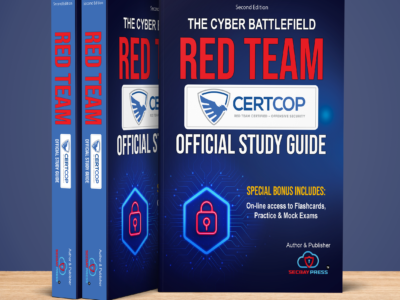

CertCop – Red Team Offensive Security
Exam code: CCRT-E023Course number: CertCopRT02 CertCop – Red Team Offensive...
Read More
CertCop – Cloud Security & FedRAMP
Exam code: CCF-E0XXCourse number: CertCopCCF CertCop – Cloud Security &...
Read More